She went there again

At 5:17 in the evening, she sent me a picture of the sea.
Not a selfie. Not the group photo she'd probably been taking all day. Just the water, the horizon, and a small crooked strip of beach where the waves folded over themselves. Three months ago, I'd stood somewhere near that same stretch with her, close enough that the sea kept stealing our footprints before either of us could decide where to walk next.
I was in my room, wearing an old T-shirt, one sock, and the expression of a man who had opened his laptop to do something useful and then spent twenty minutes staring at the same unfinished paragraph. The fan clicked above me. My tea had gone cold. Outside, evening was settling over the buildings, and the only sea in my room was the one her photograph had brought with it.
I looked at the picture longer than I needed to.
Then I typed, “You're there again.”
She replied, “Obviously. The sea didn't move.”
I smiled at my phone. She had gone back to the place with her friends, three months after the two of us had spent two days there pretending a short trip could be contained inside a calendar. The place would stay unnamed here. It had government-owned accommodation close to the beach, roads that thinned out as you went farther from the busy stretch, and nearby corners where the world seemed to have forgotten to send people. That was enough to identify it to us. We didn't need a name.
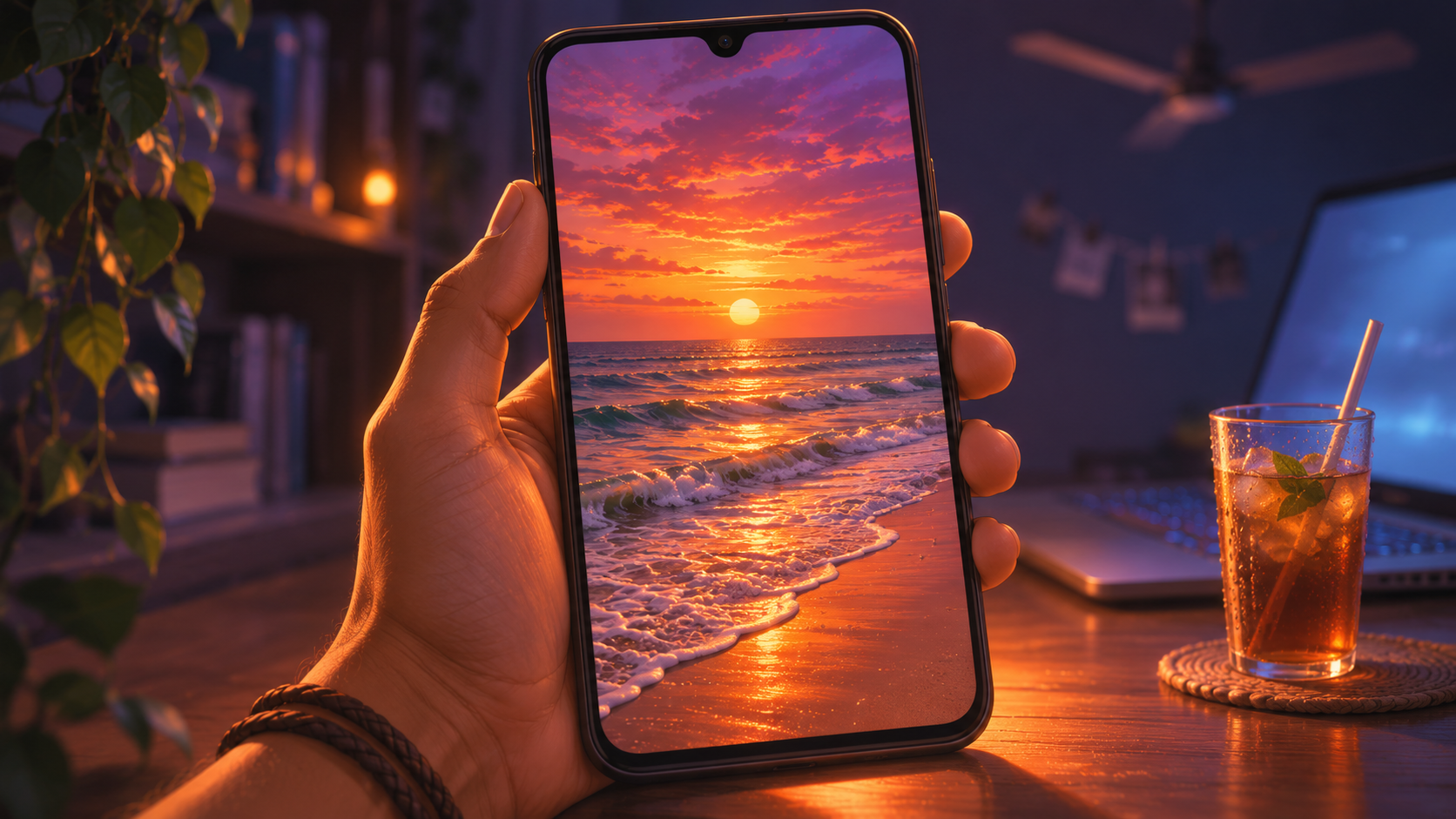
I asked whether the place looked the same. She said the sea was the same, the room was not theirs anymore, and her friends were arguing about where to eat. She was standing a little away from them, pretending to take pictures while actually reporting to me from the scene of a crime we'd committed against our own sleep schedules.
“You went to the beach already?” I asked.
“Came back. They're deciding the next stop.”
“Good. Stay away from the fuchka.”
A pause.
Then: “Don't you dare.”
That was how the trip came back to us. Not through a grand confession or a long paragraph about missing each other. It came back through a warning about fuchka.
Three months earlier, we'd reached the place with the confidence of two people who had planned a two-day trip and the delusion of two people who believed the itinerary would be in charge. We were staying in a government property near the beach. The room was plain, the furniture functional, and the windows opened to a world that smelled faintly of salt and damp air. We'd dropped our bags, looked at each other, and somehow managed to make unpacking feel like a waste of precious daylight.
The first thing we did was go toward the sea.
We walked into the water until the waves reached us properly, then stood facing each other with the sun bright on our faces and the sea tugging at our legs. The water was restless. She was laughing at something I'd said, but the laugh slowly faded as she looked at me. I remember that moment more clearly than the view: the exact second when neither of us looked away, and the whole beach seemed to become background.
We had kissed before. But that day, with salt on our skin and the wind pushing strands of hair across her face, kissing her felt like finding a place I hadn't known I'd been trying to reach. It wasn't neat or cinematic. We bumped noses once, laughed into each other's mouths, tried again, and then forgot why we'd been laughing. Every time we separated, we stayed close enough to feel the other person breathe.
There are memories that become beautiful because you remember them later. And there are memories that feel impossible even while they're happening. That was one of the second kind.

Now, in the present, she sent me a photo of her feet in the sand.
“Remember this spot?”
I wrote, “I remember you refusing to leave the water.”
“You were the one who kept staring.”
“Because someone was standing there looking illegally pretty.”
“Liar.”
“Witness testimony says otherwise.”
She sent a laughing emoji, then a voice note that began with her friends calling her name in the background. She whispered, “I have to go with them. I'll text later.” Before she disappeared, another message arrived.
“Also, I remember the fuchka.”
I could almost hear the way she said it.
That evening, we'd found a fuchka stall and made the very intelligent decision to order the spicy kind. The first one was manageable. The second one was a challenge. By the fourth, she was trying to act unaffected while her eyes had begun to water, and I was pretending I wasn't suffering because I'd made the mistake of saying, “This isn't even spicy.”
It was spicy. Extremely spicy.
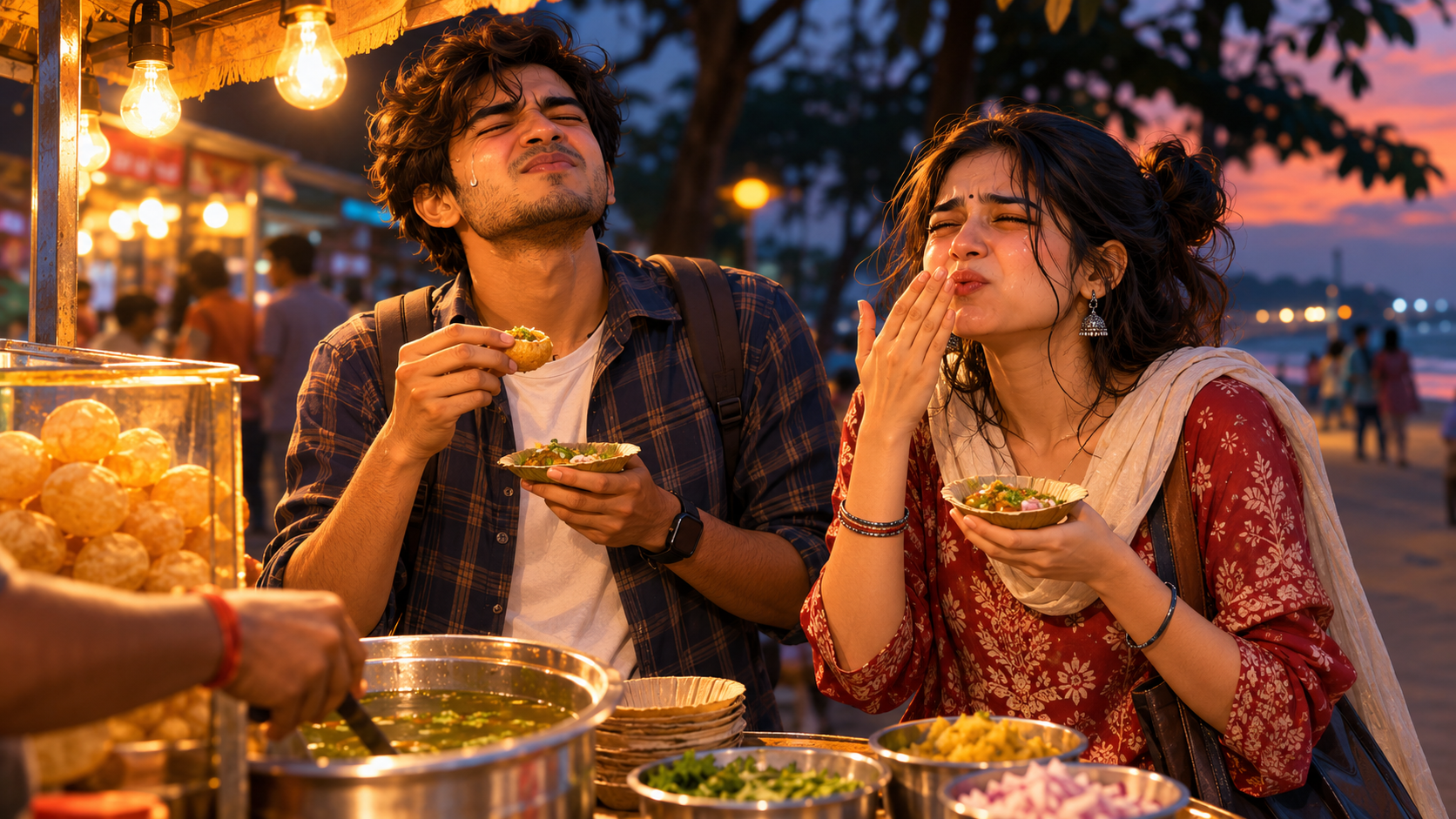
We could have asked for water. We could have bought something cold. We could have behaved like normal people with functioning survival instincts. Instead, we rushed back toward the room, both laughing and complaining, each insisting the other was being dramatic. Somewhere between the stall and the room, finding water became less urgent than being alone together again.
We got back breathless, cheeks warm, still laughing. The first kiss was meant to be a joke about finding a better cure for the spice. It didn't remain a joke for long. The heat in our mouths gave us an excuse to kiss; the way we kept returning to each other gave us a reason to forget the excuse. We paused to laugh, catch our breath, and tell each other we were ridiculous, and then kissed again.
The fuchka was never properly defeated. We simply found a distraction more persuasive than water.
Her messages arrived while I was still smiling at the memory. I could picture her standing near the path, phone held low so her friends wouldn't ask what she was doing. I wondered whether she was looking at the same stall, whether it had the same lights, whether the vendor would remember two people who behaved as if a plate of fuchka had personally challenged their relationship.
“Did you go to that stall?” I asked.
“No. Different place this time.”
“Coward.”
“I'm not risking another emergency.”
“Emergency? You were the one who said we should order the spicy one.”
“You said it wasn't spicy.”
“And I was brave enough to be wrong.”
“You were brave enough to be stupid.”
I put the phone down to laugh, then picked it up again immediately. My laptop had not moved. The unfinished paragraph remained open, a silent reminder that I'd planned to work this evening. I typed a few words, deleted them, and checked whether she'd replied.
I was not physically at the beach, but some part of me had returned there. The fan above my head became the sound of waves in the pauses between messages. The smell of cold tea almost became the memory of sea air. I could feel the old room in my imagination: the government property's plain walls, the curtains that never quite met in the middle, the dark gathering outside, and her sitting close enough that the distance between us felt like a decision neither of us wanted to make.
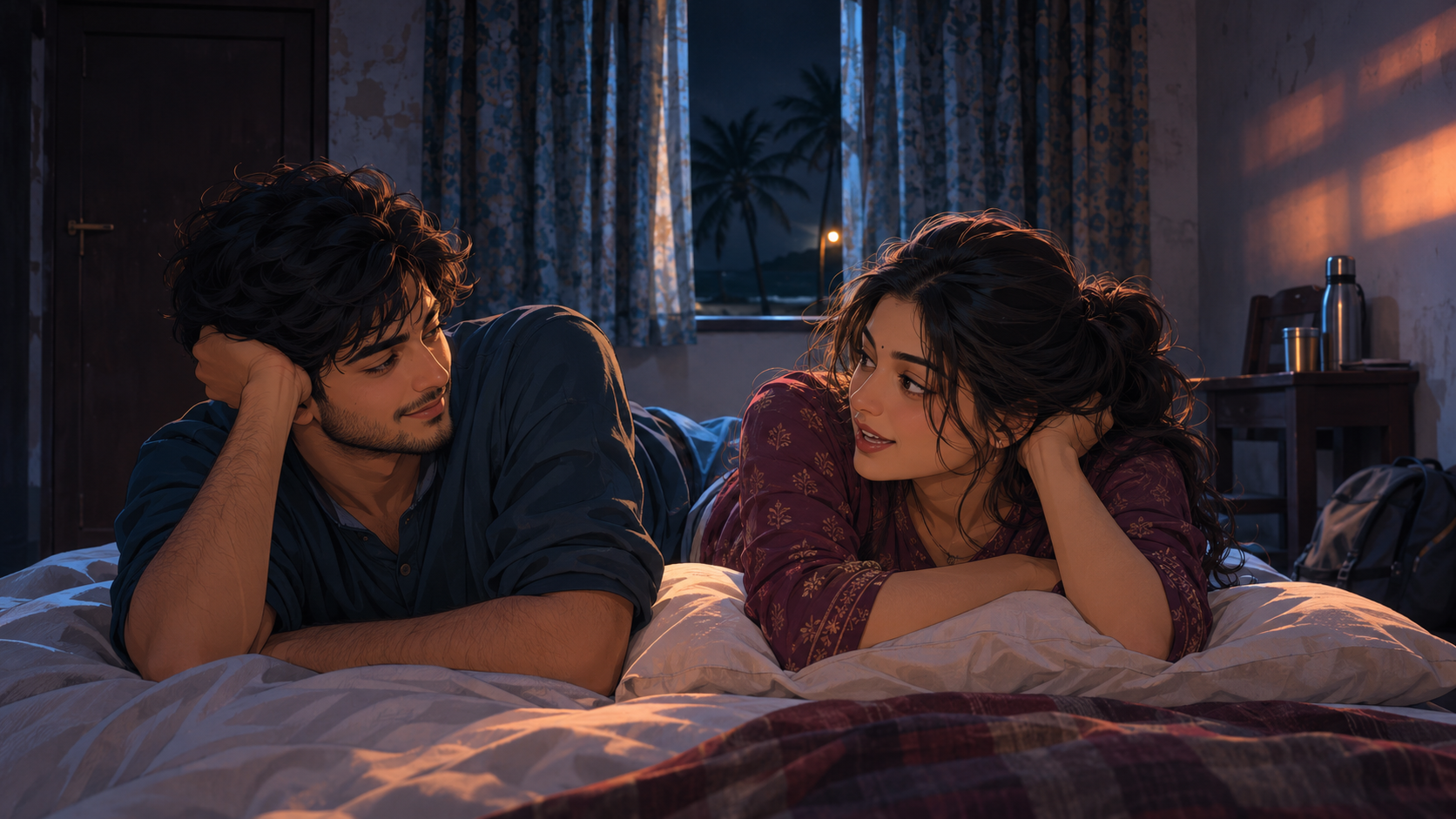
We'd gone to bed at ten that night. Or at least we'd announced that we were going to bed at ten, as if declaring a time made it a binding agreement. By midnight, we were still talking. At one, we were laughing about something so unimportant that neither of us could remember it the next morning. At two, we were lying beside each other, faces turned toward one another, speaking less and looking more. At three, we finally surrendered to sleep.
The room had been dark except for the faint light coming from outside. Every so often, a vehicle passed beyond the property, and shadows shifted across the wall. She'd been looking at me for a long time. When I asked what she was doing, she said, “Nothing.”
It was the kind of nothing that didn't need an explanation.
I looked back at her. “You're staring.”
“So are you.”
“I was checking if you were asleep.”
“That's not how checking works.”
“I'm an engineer. We test things.”
She laughed softly, and I kissed her before she could find a better reply. We were meant to be sleeping. We were meant to be awake early. We were meant to have plans for the next morning. But that night, every sensible plan seemed to be waiting patiently outside the room while we took our time being there.
At 6:02, her name lit up my screen again.
“Went past the road where we got lost.”
“We weren't lost.”
“We walked in the wrong direction for twenty minutes.”
“We were exploring.”
“We were lost with confidence.”
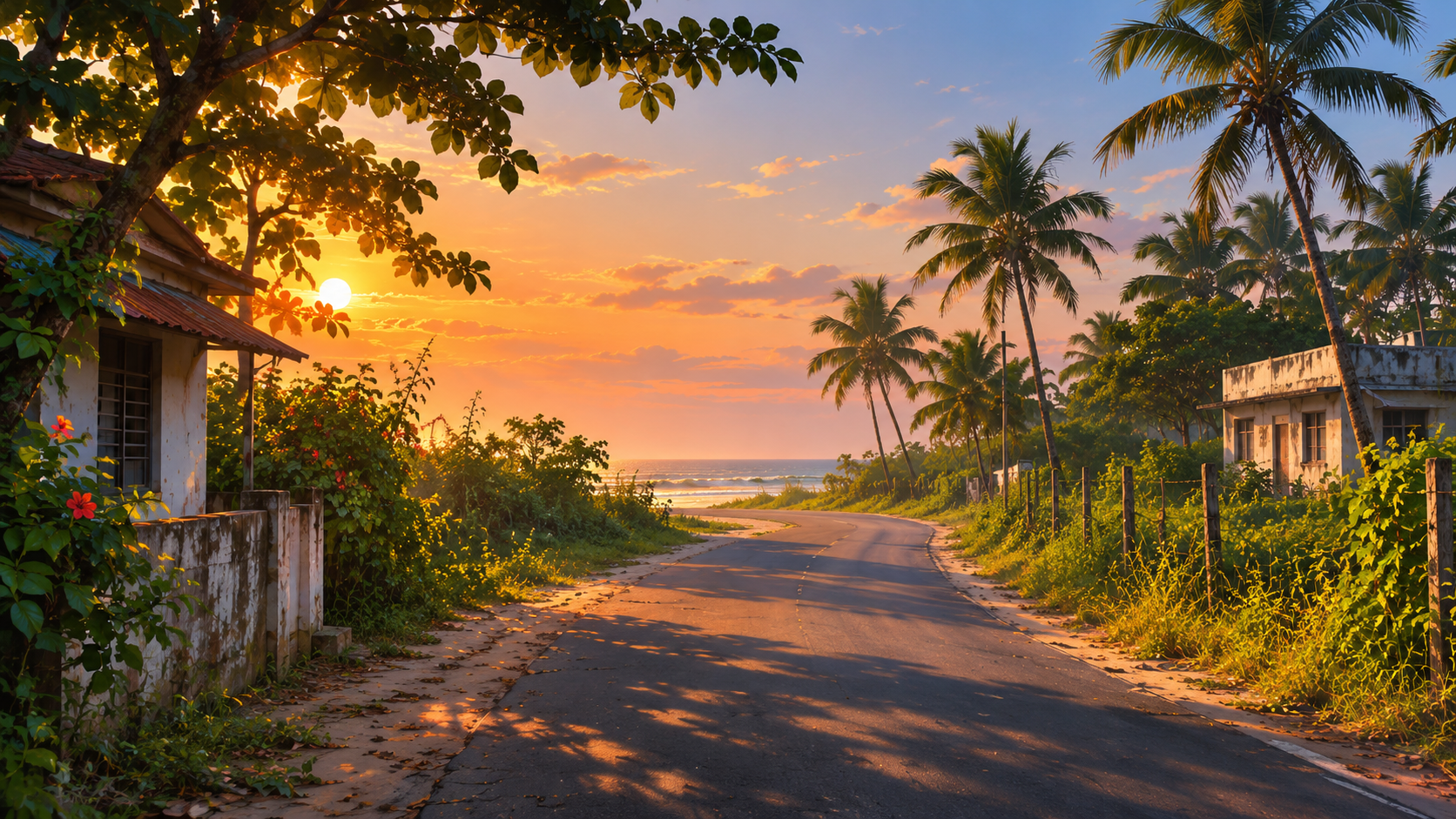
I asked where she'd gone. She sent me a picture of a narrow road running between scrubby greenery and low buildings, with the sea appearing in a gap beyond it. She and her friends had visited two other spots nearby that we'd noticed on our trip but never properly explored. Both were farther from the crowded tourist stretch, the kind of places where the road seemed to end before the view did.
“It's so empty here,” she wrote. “You would've loved it.”
That sentence stayed with me.
Not because it was romantic in the obvious way. Because it was specific. She was standing somewhere new with her friends, seeing something for the first time, and her mind had made room for the version of me who should have been there beside her. I knew that feeling. I'd done the same thing countless times: seen something funny, beautiful, or irritating and thought of the one person who would understand why I needed to tell them about it.
“Send location,” I wrote.
“Why?”
“For research.”
“Research into what?”
“Places to visit when we come back.”
“When?”
“When we come back.”
She didn't answer for a few seconds. Then she sent a photo of the road again, angled toward the empty stretch beyond it.
“There's nobody here right now,” she wrote.
I looked at the message, then at the ceiling, then back at the message. My room suddenly felt very small.
“Don't start,” she added.
“I haven't said anything.”
“You're thinking loudly.”
“That's not a real thing.”
“It is when it's you.”
The truth was, we had already been planning the next trip without admitting that was what we were doing. We were using the map as an excuse. A nearby stretch of coast. A path that led to a quiet lookout. A place where the road narrowed and the crowds disappeared. We were discussing practical things—how long it would take to get there, what time we should leave, whether we'd have enough daylight—as if logistics were the whole point.
But behind every practical question was another thought neither of us needed to spell out.
What if we went there together again? What if we had more time? What if we didn't have to rush back to a crowded place or keep checking the hour? What if we could stand by the water until the light changed, take the long route back, stop somewhere for snacks, and let the evening become whatever it became?
Our plans had ambitions. Not the grand kind that fit on a vision board. Small ambitions with salt on them. To revisit the places we'd missed. To discover another stretch of beach. To take the longer road on purpose. To have an entire evening with no one waiting for us, no schedule demanding our attention, no reason to leave a moment before we were ready.
And, yes, to kiss again in places where the world seemed to have stepped away for a while.
We weren't writing a travel itinerary. We were building a future out of suggestions we could pretend were only suggestions.
She sent me a pin. I opened it and zoomed in. The map showed the bend in the road, the little cluster of buildings, the stretch of coast nearby. I started calculating the route even though I knew the trip wasn't happening tomorrow. I was suddenly serious about a place I had never visited, because she had stood there and imagined me with her.
“It's far from the main area,” she wrote.
“Better.”
“There's barely anyone around.”
“Even better.”
“You're not even pretending to be subtle.”
“I thought we were planning a trip.”
“We are.”
“Exactly.”
A minute later, she sent a single heart. No explanation. No joke to cover it. I stared at that little symbol with the seriousness of a person receiving an official approval letter.
By evening, she was back with her friends, sharing food and laughing at something I couldn't hear. She sent me a picture of a plate of snacks, then a blurry photo of the sea taken while walking. I was still in my room. I'd finally made progress on my work, though not as much as I should have. My tea had been replaced by another tea. The fan still clicked. The same walls surrounded me, but the conversation had made the night feel wider.
I asked if she missed the first trip.
She replied, “I'm literally here. How can I miss it?”
“That is not an answer.”
“Maybe I miss the version of this place where it was just us.”
I read it once. Then again.
There are messages you can answer quickly, and messages that deserve a moment before you touch the keyboard. I wanted to say that I missed it too: the water, the late night, the room, the fuchka, the way she looked at me when she thought I wasn't watching. I wanted to tell her that three months had done nothing to make those memories smaller. If anything, distance had given them sharper edges.
Instead, I wrote, “That version had terrible sleep discipline.”
She replied, “We slept at 3 AM.”
“See? Unforgettable hospitality.”
“You were the one who kept talking.”
“You were the one who kept looking at me.”
“Someone had to make sure you weren't asleep.”
“That's not how checking works.”
She sent the laughing emoji again. Then: “I miss it too.”
The room around me went quiet in a new way. The words weren't dramatic. They weren't a promise. But they were honest enough to make me stop trying to be funny for a moment.
I thought about the first morning there, when we'd woken later than planned and rushed to get ready, only to find that the sea was not going anywhere and the day had no interest in our schedule. I remembered her standing near the water, watching the waves come in, then looking back at me as if she wanted to check whether I was still there. I remembered how we kept finding excuses to touch: a hand held a little longer, fingers brushing while walking, a shoulder pressed against mine when we stood together looking out at the sea.
None of those details would have made a particularly interesting story on their own. A walk. A kiss. A room. A shared plate of spicy fuchka. Two people who couldn't manage to go to sleep when they said they would.
But memories don't always keep the grand moments. Sometimes they keep the way someone said your name when there was nobody else around. The exact pause before a kiss. The laugh that escaped because one of you bumped into the other. The knowledge that the person beside you was looking at you with the same attention you were trying not to show.
The trip had lasted two days. Somehow, we were still finding new corners of it three months later.
She texted again from the place where her friends had stopped for dinner. They were discussing whether to go out one more time or head back. She said she was tired but didn't want the evening to end. I knew that feeling too: the reluctance to let a good day close, even when your feet hurt and you had no sensible reason to stay awake.
“Come back here with me next time,” she wrote.
I sat up straighter.
“Just us?”
“Who else would I be asking?”
I could have made a joke. I almost did. It was my usual defence: put something funny between a feeling and the person who might see it. But I was tired of hiding every sincere thing behind a punchline.
“Okay,” I wrote. “Next time, we'll do the places we missed.”
“And the quiet road.”
“And the quiet road.”
“And no sleeping at 10.”
“That's a very ambitious plan.”
“I'm serious.”
“So am I.”
The messages stopped for a little while. I pictured her putting her phone away as her friends called her back into the conversation. I pictured the dark sea beyond the lights, the air turning cooler, the road they'd take back. I wondered if she was smiling to herself. I wondered if she knew I was doing exactly the same thing in a room hundreds of ordinary details away from hers.

At 11:48, she sent one last message.
“I'm going to sleep. Unlike someone, I have people here who will make fun of me if I stay awake texting.”
“Goodnight. Behave yourself.”
“Never.”
“Try not to think about the fuchka.”
“Too late.”
Then, a few seconds later: “Next time, we'll go to that quiet place first.”
I typed, “Next time, we'll go wherever you want.”
I deleted it. Too easy. Too much like handing her the whole thing and pretending I hadn't.
I tried again.
“Next time, we'll make a proper plan.”
She replied, “We both know we'll ignore it.”
“Probably.”
“Goodnight.”
“Goodnight.”
The chat went still. Her status changed to last seen a little later. I put my phone beside the laptop and looked at the work I'd finally managed to finish. Outside, the city carried on without knowing that two people were making plans around a beach no one had named.
I could have closed the laptop and gone to sleep. Instead, I opened the map again and saved the pin she had sent.
Not because I needed directions. Not yet.
Because the next trip had already started, quietly, in a conversation that was supposed to be about the one before it.
And somewhere, in that unnamed place, there were still roads we hadn't taken, stretches of water we hadn't stood in, food we hadn't tried, and hours we hadn't spent together. We had left a few things unfinished on purpose, and a few more by accident. Three months later, we were still finding reasons to return.
Maybe that was the real trick of a good trip. You came back with sand in your shoes and salt in your hair, and then weeks later you discovered that some part of you had stayed behind. Not trapped there. Waiting there.
I turned off the desk lamp. The room went dark except for the glow of the saved map on my phone.
Next time, I thought.
And for once, it didn't feel like a vague thing people said when they wanted a conversation to end.
It felt like a plan.